THE PROJECT
Ampere (formerly Pinnguaq Association) has been working for years to make digital education more inclusive and relevant for people that are often left out of the conversation, especially those in northern, rural and Indigenous communities. In 2023, with CIRA funding, they created an open-source toolkit to help educators teach digital privacy and online safety, with a special focus on the risks posed by artificial intelligence (AI) and machine learning.
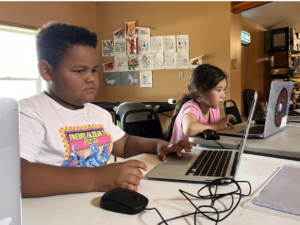
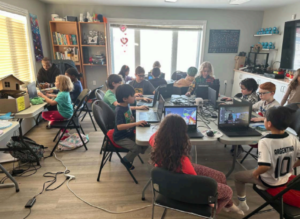
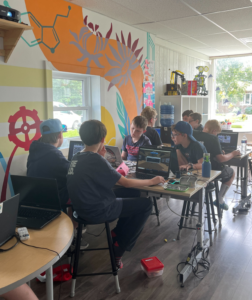
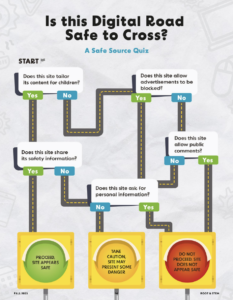
This follow-up project allowed the Ampere team to take that work a step further. With renewed funding support from CIRA’s Net Good Grants program, Ampere delivered four week-long camps for youth aged 9-14 in two distinct locations: Iqaluit, NU and Lindsay, ON. The camps were designed to be fun, hands-on and rooted in community. Kids learned how to spot deepfakes, understand how AI works, recognize online scams, and talk about cyberbullying through activities that felt more like play than school. “We believe people learn better when they’re having fun,” said Crystal Morrissey, Associate Director of Delivery Operations. “Incorporating play-based learning into the camps made digital safety meaningful and memorable.”
The curriculum wasn’t one-size-fits-all. In Lindsay, youth explored online safety through platforms like Instagram and Snapchat, while in Iqaluit, the focus shifted to tools like Facebook, which are more commonly used in northern communities. “We localize the curriculum,” Crystal explained. “What makes sense in one community might not be relevant in another, so we adapt the content to reflect how youth actually use technology.”
To make sure the camps could continue beyond the grant period, Ampere trained four local facilitators through a Train-the-Trainer model. These community members are now equipped to run future camps and share their knowledge with others.
COMMUNITY IMPACT
The camps reached over 100 youth, and sparking curiosity that extended outside the classroom. “The kids were asking questions all week about how deepfakes work,” Crystal shared. “It sparked conversations at home, too—parents were asking what they’d learned.” In particular, the deepfake activity resonated with participants and opened the door to critical thinking about how AI can manipulate images and video, a key takeaway for many youths. One participant even created a video using machine learning tools and said, “I didn’t know we could teach computers like this. It made me want to learn more about coding.”
In Iqaluit, the camps were infused with cultural practices. They opened and closed with the lighting of a qulliq, a traditional Inuit oil lamp. “It’s very culturally significant,” Crystal explained. “Children got a chance to light it and connect more deeply to their culture”.
In Lindsay, the impact was just as powerful. Youth who had once attended camps as youngsters returned as volunteers and staff, showing how Ampere’s programs support long-term growth. “We’ve had kids who started as participants and are now leading camp activities,” Crystal said. One standout moment came during a game design program, where youth met a local developer from the Kawartha Lakes region who had created his own hockey video game. “It showed the kids that you don’t have to move to California to work in tech,” Crystal said. “You can build something meaningful right here in your community.”
Importantly, the learning didn’t stay confined to the camps—it traveled home with the kids. Ampere’s free online game Gone Phishing, which teaches users how to spot scam emails, became a family activity. “Kids play it at camp and then go home and play it with their parents,” Crystal said. This kind of knowledge-sharing helps build digital literacy not just in youth, but across entire households, creating ripple effects that strengthen community awareness and resilience in the digital world.
Cross-organizational collaboration was also a surprise highlight. When flights were delayed in Iqaluit, Actua—another CIRA-funded organization working in digital literacy—found themselves unexpectedly grounded. “They were stuck for a couple days and asked Ampere if they could come in and run some programming,” Crystal recalled. “We said absolutely!” It was a spontaneous but powerful example of how organizations working in online safety can support each other and share resources.
By blending technology, culture and community, Ampere is not only helping youth become confident digital citizens but also making sure the tools they need are accessible, engaging and rooted in the places they call home.
Related links
- Ampere site: https://amp.ca/
- Ampere online learning resources: https://amp.ca/all-learn/?_learn_type=course
- https://rootandstem.ca/learn/introduction-ai-machine-learning-teachable-machines/
- https://rootandstem.ca/learn/fake-voices-versus-deepfakes/
- https://rootandstem.ca/learn/teachable-machine-image-recognition/